Welcome to the April issue of my monthly newsletter!

General Stacey Shepherd 8 Apr

Welcome to the April issue of my monthly newsletter!

You may already know that April’s birthstone is a diamond – but did you know that 80% of mined diamonds are used for industrial purposes like cutting, drilling and grinding? It’s a good thing we’re producing man-made diamonds for these processes, because natural diamonds take over a billion years to form. From deep within earth’s crust, they were pushed to the surface by volcanoes 40-55 million years ago.

Diamond mining began in Canada in 1991 in the Northwest Territories. Since then, Canada has become the 3rd biggest producer of diamonds worldwide, accounting for 13-14% of supply. Since those humble northern beginnings, diamond mining has expanded to 7 producing mines as of early 2026. And we’re not done yet! There’s currently a mineral exploration project showing promise for fancy coloured diamonds in Nunavut, plus one more unexpected location for an exploratory project. Can you guess what province it’s in?

What’s Blooming in Real Estate: Spring Market Insights
If you’re looking for a preview of what spring has in store for the housing market in Canada, you’re in the right place. Here’s everything buyers, sellers, investors, refinancers, and everyone else thinking about a change in their housing situation needs to know.
Rates: Most economists, plus the Bank of Canada itself, have confirmed they believe the policy rate is at the bottom for this rate cycle. For mortgages, that means you’re unlikely to see further rate decreases, so it’s a good time to buy or refinance for a 3-to-5-year term. For those with or looking at a variable rate, there is currently a healthy discount, but over the next two years you’re likely to see a series of increases.

Down Payment News: Nova Scotia unveiled a new program for home buyers, reducing the minimum down payment to only 2%. Credit unions are offering the consumer mortgage products, and the provincial government is providing lender insurance on the mortgages. Other provinces are taking note, although we’re yet to see any other program announced so far.

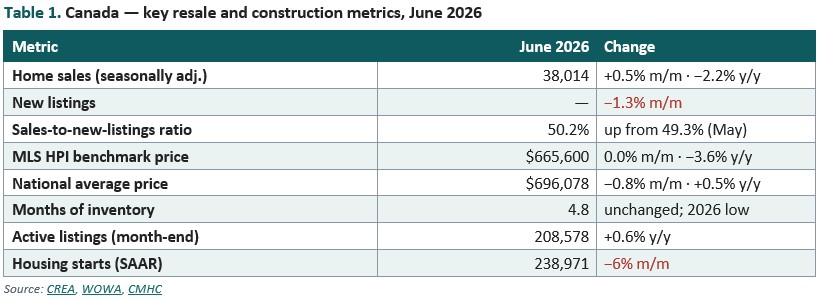
Canadian Real Estate Association: CREA announced a decline in home sales to start the year, but suggested it was weather related rather than a market downturn. The main reason they believe the market is poised for an uptick is the pent-up demand from buyers 25-40 years old. It’s the biggest home buying cohort in Canadian history, and the buyers have been shut out for the past 3-4 years due to affordability and market conditions. But now rates are at their low point, and 75-85% of the group still want to be home owners. Timing is right for action.

Canadian Mortgage and Housing Corporation: CMHC’s 2026 housing report came out, predicting near-flat data across new starts (thanks to construction costs and existing inventory), sales (affordability and carrying costs are still factors), and prices (supply and demand are near equal). Housing formation is delayed thanks to all the uncertainty in the market. But perhaps most of all, the economic uncertainty thanks to tariffs, a looming CUSMA renegotiation, and the general volatility of the US economic policy is impacting the Canadian housing market negatively. We’re seeing less activity overall, weak supply and demand, and a flat spring market in 2026.

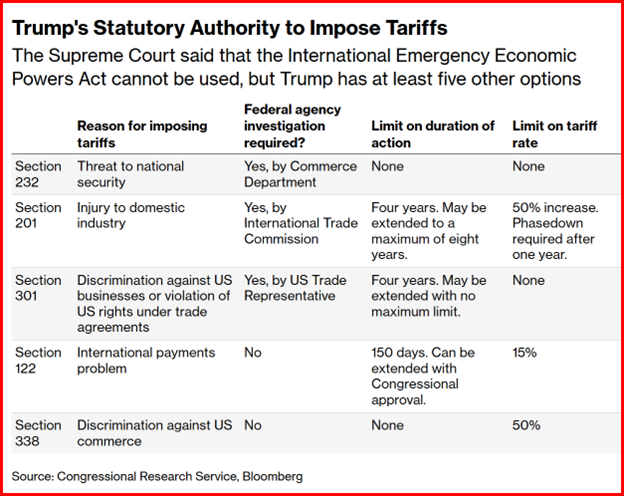
US Influence: We know the tariff situation with the US is far from resolved. Most recently, the US Supreme Court struck down the original tariffs, but Trump near immediately implemented blanket new ones using one of many legal workarounds available. Also of note is the July 1 deadline for a CUSMA review, which will redraw trade policy between the three countries. Finally, a new Chair of the US Federal Reserve will be confirmed in May. Trump has nominated Kevin Warsh, who has a history of supporting higher interest rates to control inflation. Independence of the organization is high priority for many, although Trump wants rates lowered and is unsurprisingly creating new ways to influence monetary policy. There’s a lot to watch south of the border.

General Stacey Shepherd 4 Mar

Welcome to the March issue of my monthly newsletter!

March is peak maple syrup time here in Canada – when the sap starts to flow from tapped trees into sugar houses across Quebec (where 90% of Canada’s liquid gold is produced). Maple syrup not only tastes great but also has zinc, magnesium, B2, calcium, potassium and even antioxidants. It’s unrefined and unprocessed and offers a lower glycemic index compared to refined sugars. So head on out to a sugar shack (or grocery store) and indulge in a piece of healthy Canadian heritage!

Fraud Awareness: Essential Info for Today’s Digital World
March is fraud awareness month, a great reminder that no matter who you are, scams are lurking right around the corner (or in the next email, call or post!). 2026 will undoubtably throw more sneaky, compelling, and downright dastardly scams than ever. So, we’re going to look at how and why fraud scams work, spotlight the techniques scammers use, give you tips on how to recognize a scam, and teach you what you can do to protect yourself.
Why do scams work? 

Here are my 4 E’s of an effective scam:

  1. Ego: Some people think they are too smart to fall prey. Their overconfidence says they don’t need to be cautious and that exposes them to unnecessary risk.
  2. Evolution: Scams are diverse and sophisticated – it’s not a Nigerian Prince asking you to share his millions anymore! The constant changing and diversification of scams is fuelled by new technology, making it harder to spot a fake.
  3. Education: A lack of awareness means you’re a step behind a fraudster, and you’re unlikely to recognize the newest and greatest plots.
  4. Exposure: We’re online a LOT, constantly seeing fake ads, sharing our email addresses to get discount codes, commenting on social media posts – you name it. We constantly expose ourselves to predators.

Techniques Scammers Rely On

The first strategy scammers use is emotional manipulation. They’ll create uncomfortable feelings like fear or urgency to get you to act quickly. They’ll also go the sympathy and goodwill route to appeal to your good nature and empathetic side so you help them.

The second strategy scammers use is cognitive bias. It’s our predisposition to a certain mindset that would make you more willing to comply. A few examples:

  • Optimism Bias: You don’t automatically suspect a scam
  • Truth Bias: You assume people are telling the truth
  • Authority Bias: You trust and comply with authority figures (like police or government)

The third strategy scammers use is influence. They’ll compliment you or pretend to have similar likes so they build a relationship with you. They’ll act as experts or authorities so that you trust them. And, they’ll commit to it, starting slow and building over time and increasing their requests.

How Did Scammers Get So Good?

They practice. They aren’t afraid to fail. They don’t take no as an answer. And, perhaps most importantly, they embrace technology. It catches victims unaware and drastically improves their reach and persuasiveness. Here are their fanciest tools.

  1. AI: AI makes it easy for scammers to create professional-looking websites, social media content, online ads, fake photos, persuasive emails and texts, and so much more.
  2. The Dark Web: Scammers can buy nearly any data they want, plus fake identities, malware tools, stolen credit card numbers, ransomware, a fake escrow service or even hire hackers.
  3. Deepfakes: Fake videos that clone real people and real voices are easy to create with free or cheap specialized software. These fake videos can promote products, laud fake charities or causes needing donations, even endorse ponzi schemes and pump-and-dump investments.
  4. Spoofing software: Fraudsters can mimic legitimate phone numbers, emails, or websites and even trick you into thinking you’re dealing with a real person you know.

Red Flags 

Scammers aren’t just straight up asking for your SIN and banking info anymore. Here are some common themes to watch for:

  • Urgency, including limited time offers or requests to act now
  • Threats, like an account will be closed, you’ll be arrested, or a fine is forthcoming
  • Uncommon payment forms, like wanting gift cards, cryptocurrency, or Venmo transfers
  • Secrecy, warning you not to tell friends or family or alert law enforcement
  • Poor quality, like spelling errors, weird links, or other telltale signs AI has been hard at work
  • Reciprocity, as in you get hired but you pay for your own training, or you won a prize but you have to pay to receive it

How to Avoid Falling for Scams 

If you don’t want to be blindsided by a scam, the first step is to know that scams exist. Staying current on the latest schemes will go a long way. Be skeptical about almost everything online! Installing ScamShield, call blocking or anti-virus software can help prevent a scam artist from contacting you. Multi-factor authentication is a great way to stop scammers from accessing your online accounts.

If you get faced with a scam, take a step back and think about the legitimacy of the situation. Call a trusted friend or loved one and run the situation by them. Just hearing it out loud might make you come to your senses! Practice saying no. Disconnect from the situation and reach out to the company independently (like the CRA, bank, cell phone company or store) to confirm the request or offer is real. Finally, monitor your accounts for any unauthorized activity if you think you might have given away too much information.

Conclusion

If you’d like to learn more, the FCT fraud insights centre is a great place to start. Or, get your information in video form in Mastercard’s Anatomy of a Scam docuseries. Hopefully shining a spotlight on these tactics keeps your safety top of mind. Or as Bert and Gert would say, “Stay Alert, Stay Safe”!

The Canadian Economy Shrinks by 0.6% in Q4, Owing to a Decline in Business Inventories

General Stacey Shepherd 2 Mar

The Canadian Economy Shrinks by 0.6% in Q4, Owing to a Decline in Business Inventories

Statistics Canada reported this morning that the Canadian economy contracted by 0.6% at a seasonally adjusted annual rate, a significant reversal from the 2.4% expansion posted in Q3. The weaker growth rate reflected a steep decline in business inventories, which was partially offset by increases in household spending, exports, and government capital spending.

Economists surveyed by Bloomberg were expecting a 0.2% annualized decline over the last three months of 2025, while the Bank of Canada projected flat growth.

As US tariffs weighed on Canadian exports for much of the year, real GDP increased by 1.7% in 2025, marking the slowest annual growth since the economy contracted in 2020 owing to the COVID pandemic. Lower exports, particularly to the United States, were the main contributor to the slower rise in GDP in 2025.

A preliminary estimate suggests real GDP remained unchanged in January, after increasing by 0.2% in December, slightly stronger than economists’ estimate of 0.1%.

Exports rose 1.5% in the fourth quarter, after increasing 0.9% in the third quarter. The growth in the fourth quarter was led by higher exports of unwrought gold and of unwrought aluminum and aluminum alloys. Despite the increases in the latter half of the year, exports fell 1.7% in 2025, as shipments to the United States did not fully recover following the drop in the second quarter.

Imports edged up 0.3% in the fourth quarter, as higher imports of computers, clothing and footwear, and metal ores were largely offset by lower imports of pharmaceutical and medicinal products. For the year, imports were down 0.4% in 2025, driven by the 2.9% decline in the third quarter.

The better-than-expected Q3 gain will not be sustained in Q4, as Statistics Canada’s advance estimate for October showed industrial gross domestic product fell at a -0.3% monthly pace.

The current overnight policy rate of 2.25% remains stimulative, but until the likely outcome of trade negotiations with the US is resolved, Canada’s economy will be on shaky ground. It is unclear whether the Canada-US-Mexico free trade agreement will be extended beyond this year. If not, Canada will be in for a significant trade policy redo as it seeks replacement markets for its exports.

Household spending rose 0.4% in the fourth quarter after declining 0.2% in the third quarter. Higher expenditures on rent and financial services in the fourth quarter were partially offset by lower spending on new passenger vehicles and alcoholic beverages, as overall expenditures on goods declined for a second consecutive quarter.

On an annual basis, household final consumption expenditure was up 2.3% in 2025, keeping pace with the 2.2% growth in each of the previous two years. The rise in 2025 was led by increased household spending on financial services and rent.

Total capital investment rose 0.8% in the fourth quarter, driven by increased government investment in weapons systems. In contrast, business capital investment edged down 0.1% in the fourth quarter, as both residential and non-residential investment decreased. These declines were moderated by increased business investment in machinery and equipment, primarily computers (+19.6%) and intellectual property products, namely software (+0.7%).

Annually, total capital investment increased 1.4% in 2025, led by higher government investment in weapons systems (+45.9%) and engineering structures (+6.7%). Business investment rose 0.3% in 2025, as higher residential construction (+1.0%) and non-residential construction (+1.6%) were largely offset by weaker investment in machinery and equipment (-3.5%). The year 2025 was the third consecutive year in which government capital investment contributed more to GDP growth than business capital expenditures.

Business residential investment declined in the fourth quarter, led by decreased ownership transfer costs (-2.4%), a measure of resale market activity, and lower renovations (-1.3%). New construction (-0.5%) also declined in the fourth quarter due to lower work put in place for single- and apartment units.

Higher business residential investment in 2025 represented the first annual increase since 2021, as increased new construction (+1.0%) and renovations (+2.7%) more than offset the decline in ownership transfer costs (-3.4%).

Bottom Line

While weaker-than-expected Q4 GDP figures might normally trigger an easing move by the Bank of Canada, the Governing Council has made it very clear that it remains concerned about inflation. Tariff uncertainty is especially high now that the Supreme Court has found the Trump administration misused the International Emergency Economic Powers Act (IEEPA) to impose sweeping, open-ended tariffs — striking down the legal foundation for a central pillar of the administration’s trade strategy.

The decision removes the fastest way to impose broad country-level duties, but it does not end the tariff debate. Other statutory authorities remain in play, and businesses and trading partners are left to assess what comes next.

The ruling also lands amid sustained political pressure around affordability, which may shape how aggressively trade tools are redeployed. Even if tariff rates decline, businesses must now assess whether alternative authorities will be used to reimpose them. For the real economy, restoring stability may matter as much as reducing tariffs themselves.

Dr. Sherry Cooper
Chief Economist, Dominion Lending Centres
drsherrycooper@dominionlending.ca

Welcome to the February issue of my monthly newsletter!

General Stacey Shepherd 3 Feb

February, the month best known for Superbowl, groundhogs, Mardi Gras, and adding an extra day to our calendars every fourth year. But did you know there was once (and only once in the past 2000+ years) a February 30th?

From 1582-1752, most of the world was migrating from the Julian calendar to the Gregorian calendar. The longer a country waited to change over, the more time you needed to add or subtract from your calendar. In 1712, Sweden was making their move – and implemented a one-time-only February 30th to make the transition. Imagine being born on a day that never happened again for the rest of your life?!

Reverse Mortgages: A Modern Tool for Retirement Planning

Visualize this: It’s 1986. You’re an accountant in Vancouver. You’re seeing seniors living longer, healthier and more self-sufficient lives than ever. But they don’t have enough cash to pay their day-to-day expenses.

You want to help them. So, you create a financial product that lets them access home equity without giving up ownership.

You call it… the Canadian Home Income Plan, and lovingly refer to it as a CHIP. Your product – a reverse mortgage – gives seniors a way to stay in their homes, access the equity without selling, and have complete flexibility and control over the funds. It has a slow start, but over the next decade it catches on across Canada.

Fast forward to 2026 and the reverse mortgage has evolved into a useful tool for so many Canadians. We’ve seen a 40% increase in usage of reverse mortgages in the past 3 years alone! There are several reasons for this, including skyrocketing property values, inflation driving up the cost of living, people living longer and healthier after retirement, and a whopping 71% of those over 75 still owning homes. So, older Canadians are opting to supplement their income with home equity to maintain or improve their standard of living in retirement.

What are the Basics of a Reverse Mortgage?

A reverse mortgage is available exclusively to homeowners aged 55 and older; all applicants must meet that minimum age. You can access anywhere between 15-55% of the value of your home, with your age and the location playing the biggest roles in the amount.

With a reverse mortgage, you can take out money in four different ways:

  1. Use it like a line of credit
  2. Take out a lump sum of cash at any time
  3. Arrange regular ongoing monthly payments
  4. Use a combination of options 2 and 3 above

Also of note is that you must live in the home, maintain the property, and ensure property taxes and insurance are both paid and current. You can get up to 3 reverse mortgages and even qualify for one on multi-unit properties (up to 6 units).

What are the Benefits?  

A reverse mortgage doesn’t depend on your credit score or your income for qualification. In fact, you don’t need to have any income at all! You also maintain complete ownership of your home and continue to live in it and build equity.

Another set of benefits are that the funds aren’t considered income, so they’re not taxed and don’t impact any pension or benefits you qualify for. You can even use this as part of your tax strategy (do consult a financial planner about this though).

What Can I Use a Reverse Mortgage for? 

These funds are extremely flexible, so you can use them for nearly anything. A few common ways Canadians use them are:

  • Home renovations or upgrades
  • Helping family (like a gifted down payment, a living inheritance, or a paying for a wedding)
  • Buying another property
  • Paying off higher interest debts
  • Funding your lifestyle, a vacation, or other expenses

What Will a Reverse Mortgage Cost?  

There are two types of costs you’ll encounter with a reverse mortgage.

First, like any mortgage, you’ll be charged interest. The rates are typically 1-2% higher than a regular mortgage, but you have the same flexibility with fixed or variable rates in various terms.

Second, you’ll have upfront costs to fund the reverse mortgage. You’ll need to get independent legal advice, an appraisal on your home, and you’ll most likely pay a lender or setup fee. Those three items will typically cost $1500 – $3000. You might be able to negotiate the rate or even find a promotion that waives the setup fee, so using a mortgage professional to shop around could save you money.

How do I Get Out of a Reverse Mortgage? 

Much like a regular mortgage, you can pay off the amount owing in full at the end of the term without penalty. You can also make regular payments to bring down the balance. Lenders may also impose early repayment fees depending on the terms and conditions.

Alternatively, if you sell the property, you repay the amount in full at the time of sale. In the case of death, your reverse mortgage must also be repaid in full, before your estate is disbursed.

Are Reverse Mortgages Regulated? 

Yes. The industry is regulated by the Office of the Superintendent of Financial Institutions (OSFI). They’re considered a non-recourse loan, meaning you’ll never have to repay more than the property is worth or sold for. You often see this feature advertised by lenders as a ‘no negative equity guarantee’, but know that’s a legal requirement here in Canada.

Are Reverse Mortgages a Scam?  

No. They’re a legitimate and useful way for people to access home equity without selling their home. They’ve been approved and endorsed by the Canadian Association of Retired Persons (CARP), and members can even qualify for a $250 fee rebate upon funding. Plus, the Ontario Teachers Pension Plan invests in one of the main reverse mortgage companies.

However, like any financial product, the reverse mortgage market sees its share of scams. Be sure to use a licensed and experienced mortgage professional to avoid them. Look out for anyone one asking you to sign over the title to your home (never do this), or contractors offering to do the paperwork and get funding for you to fund upgrades or renovations. Those are big red flags!

Are there Alternatives to a Reverse Mortgage?

You always have options! A Home Equity Line of Credit (or HELOC) lets you take out equity and offers up to 80% of the value of your home (although you need income to qualify). You could also sell your home and downsize, rent, or move into another type of residence. No matter what route you go, you’ll want to look at the total cost of each option to help you make the best decision.

What Are the Next Steps to Getting a Reverse Mortgage? 

I’d love to help you explore your options. There are several Canadian financial companies that offer reverse mortgages in 2026, each with different fees, requirements and features. I would be happy to compare them and help you pick the best choice for your unique situation. Let’s set up a call to discuss.

That’s it for February!

A reminder that Wednesday February 25 is pink shirt day, which aims to raise awareness of bullying in schools, workplaces, homes, and online. Learn more about the cause on their website.

From the bottom of my heart, wishing you a great month ahead and hope to see you back here in March.

Interest Rate Hike from the Bank of Canada

General Stacey Shepherd 2 Mar

This article is from Dr Sherry Cooper about the Bank of Canada interest rate hike.

Bank of Canada Starts Hiking Rates, Signalling More To Come

The Governing Council of the Bank of Canada raised the overnight policy rate target by a quarter percentage point in a widely expected move and signalled that more hikes would be coming. This is the first rate hike since 2018. In a cautious stance, the Bank announced it was continuing the reinvestment phase, keeping its overall Government of Canada bonds holdings on its balance sheet roughly stable.

The Bank’s press release highlighted the major new source of uncertainty provided by the unprovoked invasion of Ukraine by Russia and suggested that it is a new source of substantial inflation pressure. Prices for oil, metals, wheat and other grains have skyrocketed recently. Moreover, this geopolitical distention negatively impacts confidence worldwide and adds new supply disruptions that dampen growth. “Financial market volatility has increased. The situation remains fluid, and we are following events closely.”

The Bank commented that economies have emerged from the impact of the Omicron variant more quickly than expected. Demand is robust, particularly in the US.

“Economic growth in Canada was very strong in the fourth quarter of last year at 6.7%. This is stronger than the Bank’s projection and confirms its view that economic slack has been absorbed. Both exports and imports have picked up, consistent with solid global demand. In January, Canada’s labour market recovery suffered a setback due to the Omicron variant, with temporary layoffs in service sectors and elevated employee absenteeism. However, the rebound from Omicron now appears to be well in train: household spending is proving resilient and should strengthen further with the lifting of public health restrictions. Housing market activity is more elevated, adding further pressure to house prices. Overall, first-quarter growth is now looking more solid than previously projected.”

Canadian CPI inflation has risen to 5.1%, as expected in January, well below the 7.5% level posted in the US.” Price increases have become more pervasive, and measures of core inflation have all risen. Poor harvests and higher transportation costs have pushed up food prices. The invasion of Ukraine is putting further upward pressure on prices for both energy and food-related commodities. All told, inflation is now expected to be higher in the near term than projected in January. Persistently elevated inflation increases the risk that longer-run inflation expectations could drift upwards. The Bank will use its monetary policy tools to return inflation to the 2% target and keep inflation expectations well-anchored.”

The final paragraph of the Bank’s press release speaks with great clarity: “The policy rate is the Bank’s primary monetary policy instrument. As the economy continues to expand and inflation pressures remain elevated, the Governing Council expects interest rates will need to rise further. The Governing Council will also be considering when to end the reinvestment phase and allow its holdings of Government of Canada bonds to begin to shrink. The resulting quantitative tightening (QT) would complement the policy interest rate increases. The timing and pace of further increases in the policy rate, and the start of QT, will be guided by the Bank’s ongoing assessment of the economy and its commitment to achieving the 2% inflation target.”

Bottom Line

The Bank of Canada has made a clear statement regarding the outlook for a normalization of interest rates. We expect a series of rate hikes over the next year. Expect another 25 basis point increase following the next meeting on April 13. The increased uncertainty and volatility arising from the war in Ukraine is front of mind worldwide. Still, it will not deter central banks from tightening monetary policy to forestall an embedded rise in inflation expectations.

The Bank of Canada has postponed Quantitative Tightening, for now, a prudent move in the face of geopolitical uncertainty.

Credit Scores

General Stacey Shepherd 16 Feb

Credit Score, do you know what your credit score is? This score is a large piece of your mortgage application. Good credit scores are 680-900. I look at credit every day and can give you tips to increase your credit score in a few months.
Sometimes paying down a credit card will increase your score drastically. It is really important to make sure your cards do not go over limit or even 50% of your limit. If your card is a limit of $5000 you should not put more than $2500. Pay your bills on time every month.
The two companies lenders use to check your credit are Equifax and Transunion.

Check out Equifax’s site on What is a good Credit Score;
https://www.consumer.equifax.ca/personal/education/credit-score/what-is-a-good-credit-score/

Mortgage Rates

General Stacey Shepherd 25 Jan

Let’s lock in your mortgage rate today! Mortgage rates are increasing. I can have a lender hold a rate for you for 120 days. If rates decrease in that time I can get you the lower rate. I make it easy for you.